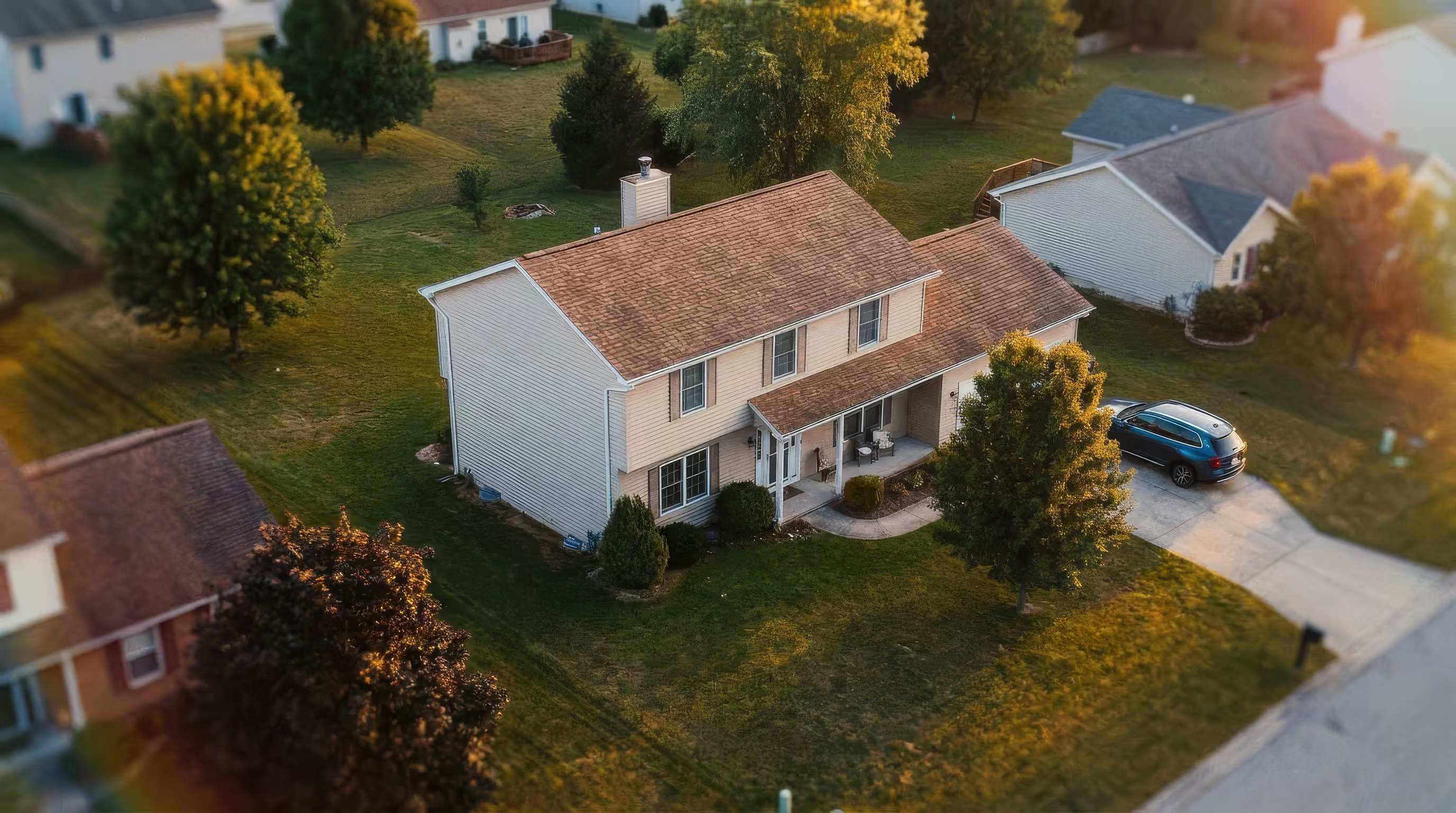

When Sarah and her husband bought their home, flood risk was on the checklist, so they did what most careful buyers do. They pulled up a FEMA flood map, confirmed the house sat outside a high-risk zone, and learned their lender wouldn’t require flood insurance. With inspections, closing costs, and moving boxes already competing for their attention, flooding felt like one less thing to worry about.
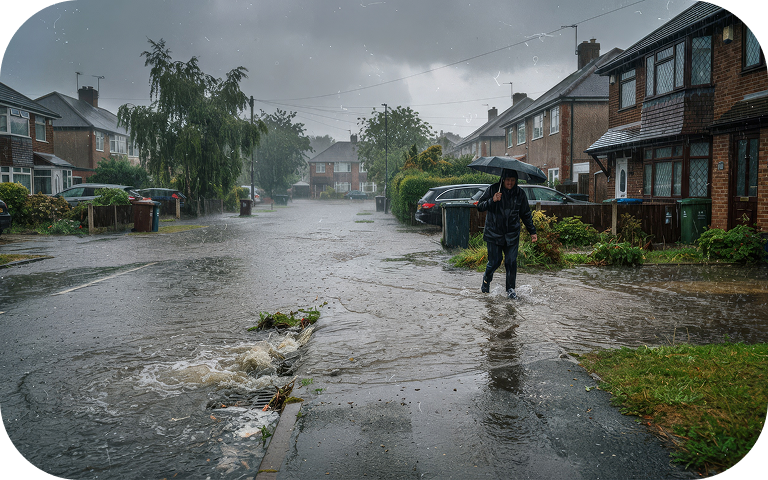
A few years later, a heavy storm overwhelmed the neighborhood’s drainage system. Water moved across the yard and into the house, soaking flooring, drywall, cabinetry, appliances, and a decade of belongings they hadn’t thought to insure separately.
The map had been accurate. Their home really was outside the highest-risk zone. It just turned out that “outside a flood zone” and “outside flood risk” don’t have the same meaning.

Can a home flood if it’s outside a high-risk flood zone?
Flooding is the most common and widespread weather-related disaster in the U.S., and it isn’t limited to coastal towns or places with a visible river running through them. Over the past two decades, 99% of U.S. counties have experienced a flood, according to FEMA, yet only about 4% of homeowners carry flood insurance, per U.S. Government Accountability Office estimates.
That gap between exposure and coverage isn’t really about people ignoring the risk. It’s about a specific, reasonable assumption: if the map says low-risk, why would you need a policy?
Here’s the problem with that assumption. A flood zone measures probability, not possibility. It tells you how likely water is to reach a given property in a given year, not whether it can happen at all. Heavy rainfall, an overwhelmed storm drain, or a swollen creek two properties over can all create flooding regardless of how a property is shaded on a FEMA map.
Sarah’s experience wasn’t unusual. Roughly one in three NFIP claims come from outside officially designated high-risk zones, according to FEMA and industry claims data.
Just five inches of water
can cause more than
$25,000
in damage to an average home.
FEMA
How much damage can a small amount of flooding cause?
There’s a second assumption worth mentioning: that flood damage means several feet of standing water, ruined foundations, a house you see on the news.
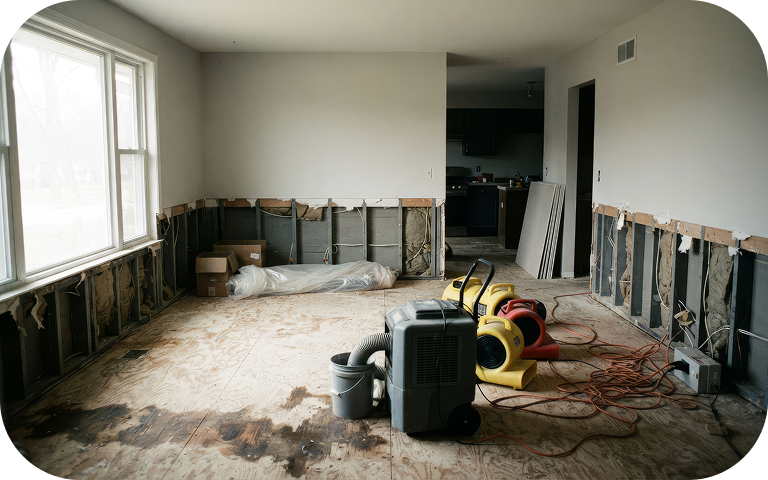
FEMA’s own estimate is more modest than that image, and more surprising. Just five inches of water in an average-sized home can cause more than $25,000 in damage. Flooring, drywall, cabinetry, and electrical systems can be seriously damaged well before water reaches that level, and it doesn’t take an extended period for that damage to happen.
For Sarah, the water never rose past a few inches in most rooms, but the repair bill still ran into the tens of thousands.
Being outside a high-risk flood zone does not mean being outside flood risk.
What does NFIP flood insurance cover?
For many homeowners, the National Flood Insurance Program (NFIP) is the first, and sometimes only, flood coverage they ever look into. Congress created it in 1968, at a time when private flood insurance was hard to find at any price, and it remains the backbone of flood coverage in the U.S. today.
NFIP does real work. But it has three structural limits worth understanding before assuming it fully covers a property:
- A $250,000 cap on building coverage, for a single-family home. If covered damage exceeds that figure, the difference is the homeowner’s to absorb.
- No Additional Living Expenses (ALE), also called Loss of Use. If a flood makes a home temporarily unlivable, NFIP generally doesn’t help with the cost of somewhere else to stay while repairs happen.
- A 30-day waiting period before a new policy takes effect, with some exceptions, including certain lender-required situations. That gap matters more in ordinary moments like closing on a home, switching insurance agents, or simply catching a gap in coverage that needs to be filled.
Since 1996,
99%
of U.S. counties have experienced flooding.
NOAA
Yet only
4%
of homeowners carry flood insurance.
FloodSmart
What does a homeowner actually need to know before a storm?
Three questions tend to matter more than whether a policy exists at all:
- Is the building limit high enough to cover what repairs would actually cost? A newer, larger, or renovated home can easily exceed $250,000 in flood damage, especially once flooring, mechanical systems, and finishes are accounted for.
- Is there help with temporary housing if the home can’t be lived in during repairs? For some homeowners, this ends up mattering as much as the structural damage itself.
- Can coverage even be purchased if the home sits outside a high-risk zone? Not every flood policy is written to cover the homes that NFIP considers lower-risk, which can be a reason why so many end up uninsured in the first place.
These questions matter more for higher-value homes, coastal properties, and homes just outside a mapped high-risk zone. The properties where the gap between “what a policy covers” and “what recovery costs” tends to be widest.
What is private flood insurance and how is it different from NFIP?
Private flood insurance closes specific, well-documented gaps within and outside the NFIP system. It can mean primary coverage in place of NFIP or excess coverage that sits on top of an existing policy to add protection above the primary policy’s limit.
| NFIP | Typical private flood policy | |
|---|---|---|
| Building coverage limit | $250,000 (single-family) | Can extend well beyond $250,000, depending on the insurer |
| Additional living expenses | Generally not covered | Often included, subject to policy limits |
| Waiting period | Typically 30 days | Varies by insurer; some offer immediate coverage |
| Availability outside high-risk zones | Available, but often overlooked | Varies by insurer and eligibility |
Adaptive’s residential flood product, as one example in this category, offers primary coverage on properties with a combined Total Insured Value (TIV) up to $4M, including Additional Living Expenses up to $100K, Increased Cost of Compliance coverage up to $30K, no waiting period, and eligibility for properties both inside and outside NFIP’s designated high-risk zones. For homeowners who already have flood coverage in place, the same product also offers excess coverage of up to $2.5M on top of an existing policy for properties with a combined TIV up to $10 million.
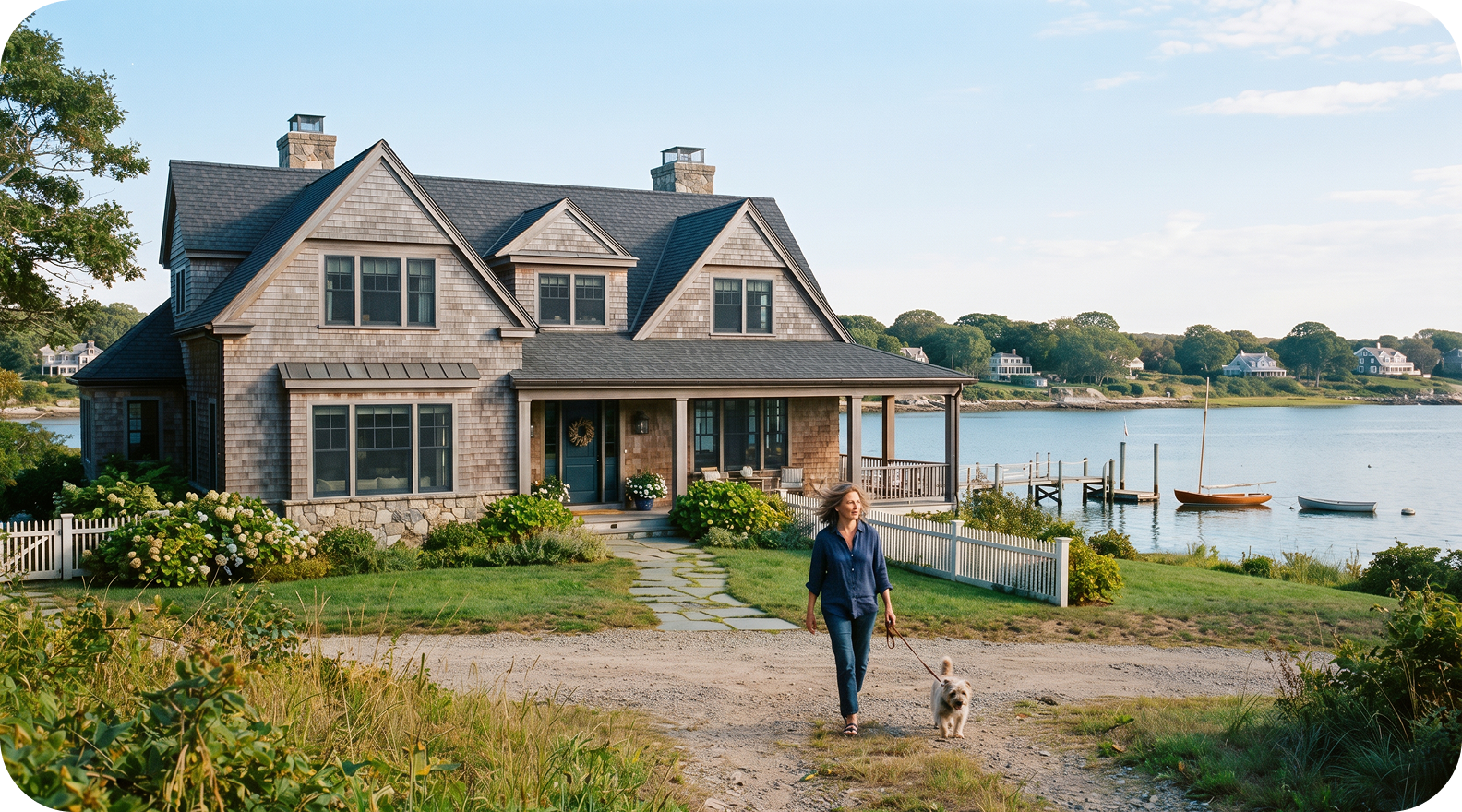
What happened to Sarah?
Sarah’s house was repairable, and the family got through it. What the experience changed was the question she asks now. Instead of “am I in a flood zone,” she asks “what would it actually cost if this happened again and what would help me get through it?” It’s a small shift that has her ready either way.
Frequently Asked Questions
Does homeowners insurance cover flood damage?
No. Standard homeowners insurance policies exclude flood damage entirely. Coverage for flooding requires a separate flood insurance policy, either through NFIP or a private insurer, like Adaptive Insurance.
Do I need flood insurance if I’m not in a high-risk flood zone?
It’s not required by most lenders, but it can still be worth having. According to FEMA and industry claims data about one in three NFIP claims come from outside officially designated high-risk flood zones.
What does NFIP flood insurance cover?
NFIP covers direct physical damage to a home’s structure and separately, its contents, capped at $250K for the building and $100K for contents for single-family homes. It doesn’t cover Additional Living Expenses (temporary housing costs) if a home becomes unlivable during repairs.
Is there a waiting period for flood insurance?
NFIP policies typically have a 30-day waiting period before coverage takes effect. Private flood insurance providers, like Adaptive Insurance, offer coverage with no waiting period.
Who should consider private insurance instead of NFIP?
Homeowners with potential flood damage that could exceed NFIP’s $250K cap or want coverage for temporary housing costs during repairs may want to consider private insurance. It can replace NFIP completely or it can sit on top of it as excess coverage, depending on what’s already in place.
For homeowners: Contact Adaptive at hello@adaptiveinsurance.com to find out more and connect with an agent.
For agents: Get registered with Adaptive to start quoting and binding residential flood coverage for your clients.